A large percentage of the population has dysfunctional hip flexor muscles as a result of poor posture, faulty biomechanics, sitting too much, and/or stress.1, 2, 3, 4 In this blog, The BioMechanics Method (providers of the the fitness industry’s highest-rated Corrective Exercise Specialist and Advanced Corrective Exercise Specialist certifications) explains how tight hip flexors cause lower back pain, knee pain, and ankle and foot pain. You will also learn how to effectively address these often-overlooked muscles with corrective exercises.
What Are the Hip Flexors?
The hip flexor muscles are a group of muscles (psoas major, psoas minor and iliacus) that originate on the front of the spine and pelvis, cross the front of the hip and attach to the inside of the upper leg (see Figure 1).3
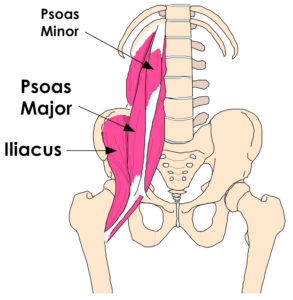 Figure 1: The Hip Flexors
The “Hidden” Problem: Out of Sight, Out of Mind
Unlike superficial muscles like the quadriceps, biceps, or pectorals, the hip flexors are deep muscles that can’t be detected with the naked eye. Because they are “hidden” within the body, they are routinely neglected until localized pain develops or severe hip and back restriction occurs.
Furthermore, many fitness, exercise and health professionals address these muscles incorrectly. A common mistake is treating the hip flexors as merely tight, and using only local stretches to “fix” the problem. However, prolonged sitting frequently leaves the psoas and iliacus in a chronically shortened state that can shut down the glutes as well. In this condition, stretching the hip flexors often worsens lower back pain, exacerbates pelvic instability and risks straining the hip itself. Effective corrective exercise programming requires targeted soft-tissue release, pelvic stability and progressive neuromuscular re-education, not just static stretching.
What Do the Hip Flexors Do?
The psoas is the only muscle group directly linking the spine to the lower extremities. Because of this unique anatomical bridge, the hip flexors serve two essential roles:
-
Locomotion: These muscles flex the hip, drawing the leg toward the torso during walking, sprinting, and climbing, while eccentrically controlling extension as the leg travels behind the body.3, 4
-
Postural Stabilization & Upright Balance: The psoas also acts as a dynamic stabilizer for the lumbar spine and pelvis. When standing upright, the psoas works synergistically with the diaphragm, pelvic floor, and deep core stabilizers to support an erect, balanced posture against gravity. Without coordinated psoas function, maintaining an upright spine without compensation is biomechanically impossible.2, 5
How Tight Hip Flexors Cause Back, Knee, and Foot Pain
Constant, prolonged sitting holds the hip flexors in a shortened position. Over time, adaptive shortening prevents the hip from reaching full, natural extension when walking or running. When the leg cannot travel behind the body freely, the body seeks movement elsewhere. It typically compensates by tilting the pelvis anteriorly and hyper-extending the lumbar spine (Figure 2). This excessive arching increases compressive loads on the lumbar discs and facet joints, leading to chronic low back pain.3
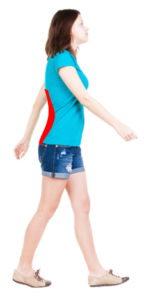 Figure 2: Tight Hip Flexors Causing the Lower Back to Overarch
Similarly, common postural and movement imbalances such as flattening of the feet (i.e., overpronation) and/or knocked knees can rotate the ankle and leg inward, rather than allowing them to travel behind the body correctly. This disruption in the movement of the legs leads to further hip flexor dysfunction, alters movement patterns, and over time results in pain to the feet, ankles and knees.3, 4
Exercises for Tight Hip Flexors
Restoring length and proper neuromuscular control to the hip flexors requires a sequenced approach. You must first restore muscle health and release long-term tension. This should be done before stretching with pelvic control is introduced. Then, and only then, should full-body kinetic chain movements be integrated.
Massaging the Hip Flexors
Begin your hip flexor rehabilitation program with this self-massage technique using a foam roller. 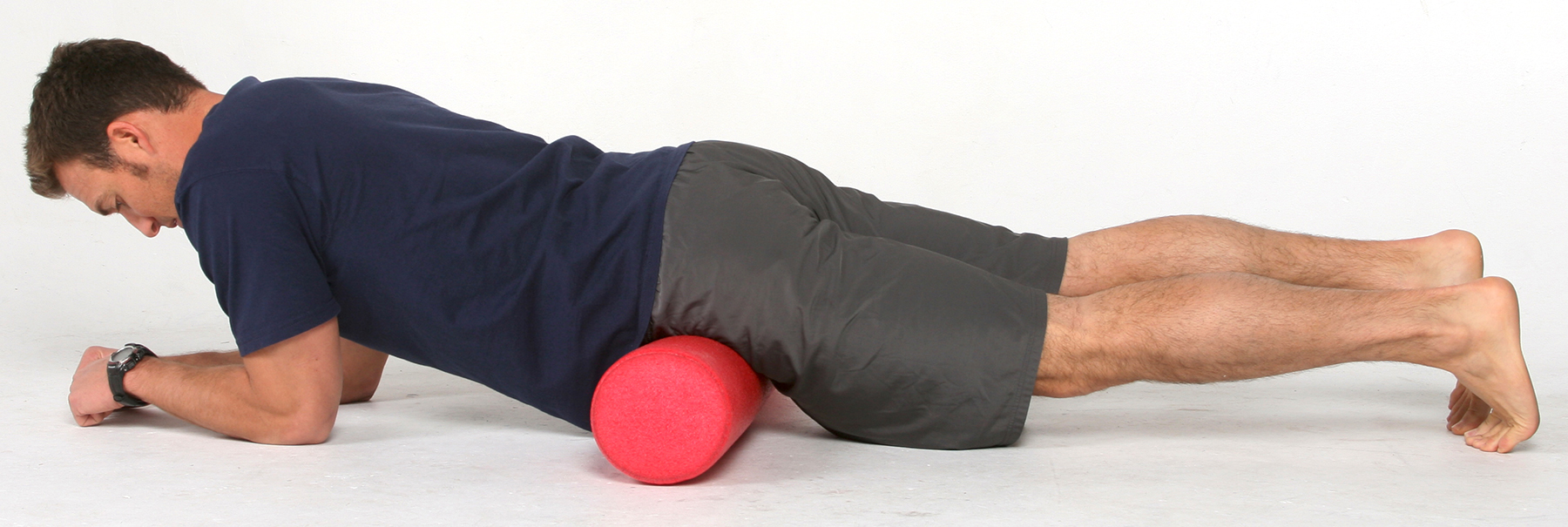
Place the roller perpendicular to the front of your body and lie over it at hip level. Find a sore spot on the front of your hips and hold your body weight on it for a few seconds to help your muscles release. Move your upper body to roll the roller to different sore spots on the upper leg keeping your abdominals engaged to ensure that your lower back does not arch too much. Roll for 30 seconds to 1 minute on each side at least once per day.
You can also use a tennis, lacrosse, or softball ball for a more targeted release.
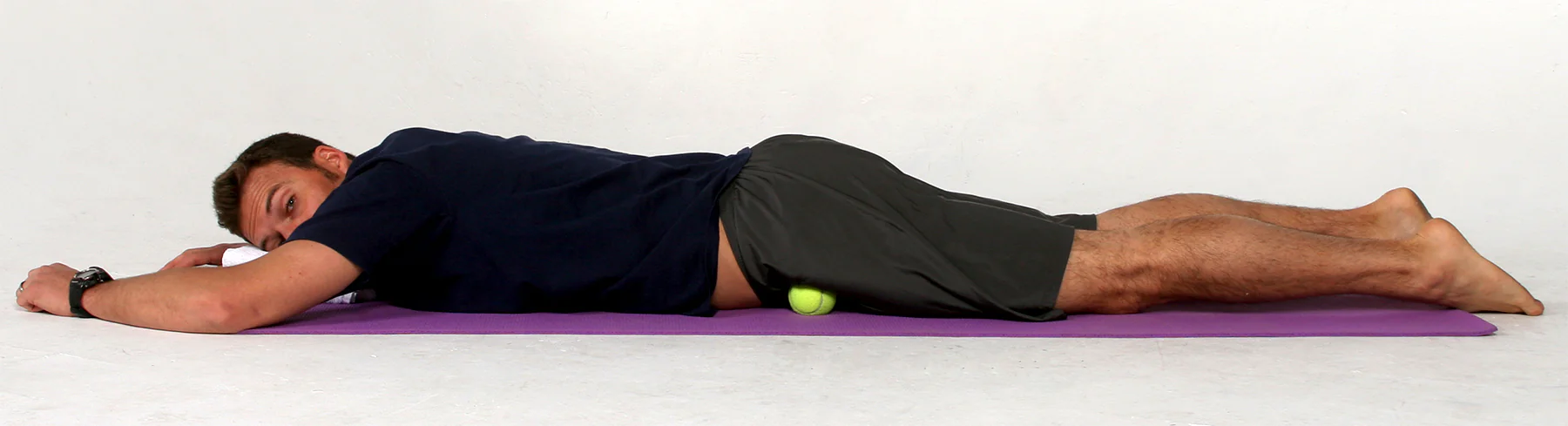
Because the psoas muscles of the hip flexor group originate on the lumbar spine, begin by placing the ball beside your bellybutton (which is in line with the top of your lumbar spine). Move the ball to each sore spot you find as you move it down your abdomen toward your hip. Hold it there for 10 to 30 seconds until the tension releases. Do each side of the body for a total of 2 to 3 minutes at least once a day.
Stretching the Hip Flexors
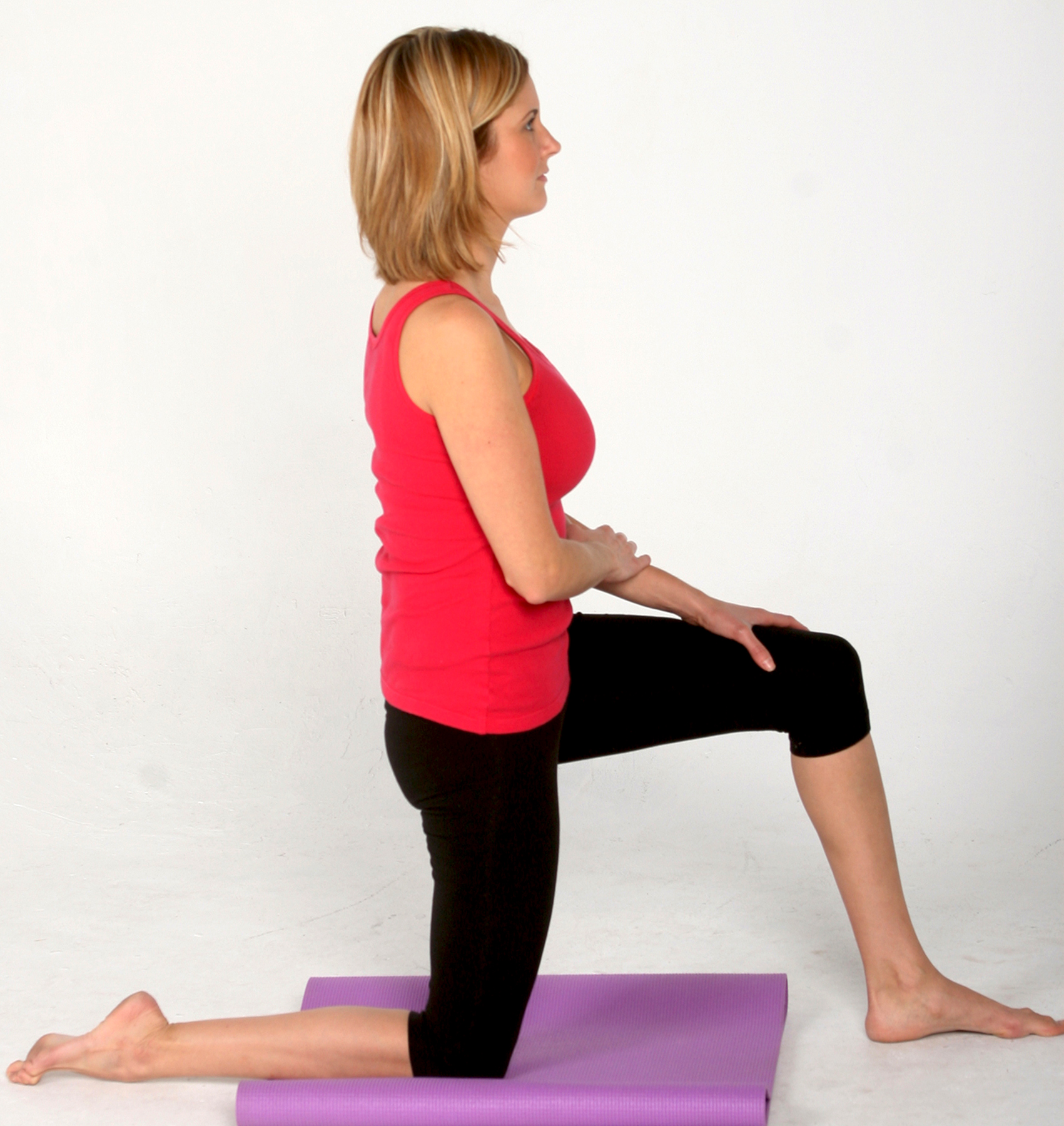
Stretching the hip flexors in this kneeling position is a great way to help encourage the hips to move forward under the spine so that your lower back does not have to overcompensate by arching excessively to take your leg behind your body.
Kneel with one leg in front of the other. Tuck your hips under (i.e., posterior pelvic tilt) until you feel the glutes of your kneeling leg contract. This will help stabilize the pelvis and help release the hip flexors more effectively. Keep the torso upright without arching your lower back excessively. If you need a balance aid to keep stable, place your hand on a chair or bench. Hold for 30 seconds each side. Do once per day. (Note: The person in the picture is stretching her right hip/leg).
Stretching The Hip Flexors with The Whole Body
This next stretch is a progression from the kneeling hip flexor stretch shown above as it integrates other parts of the body. This stretch addresses tightness in the hip flexors, but also in the calves, abdominals, and shoulders to help coordinate correct movement and an upright posture all the way from the feet up to the head.
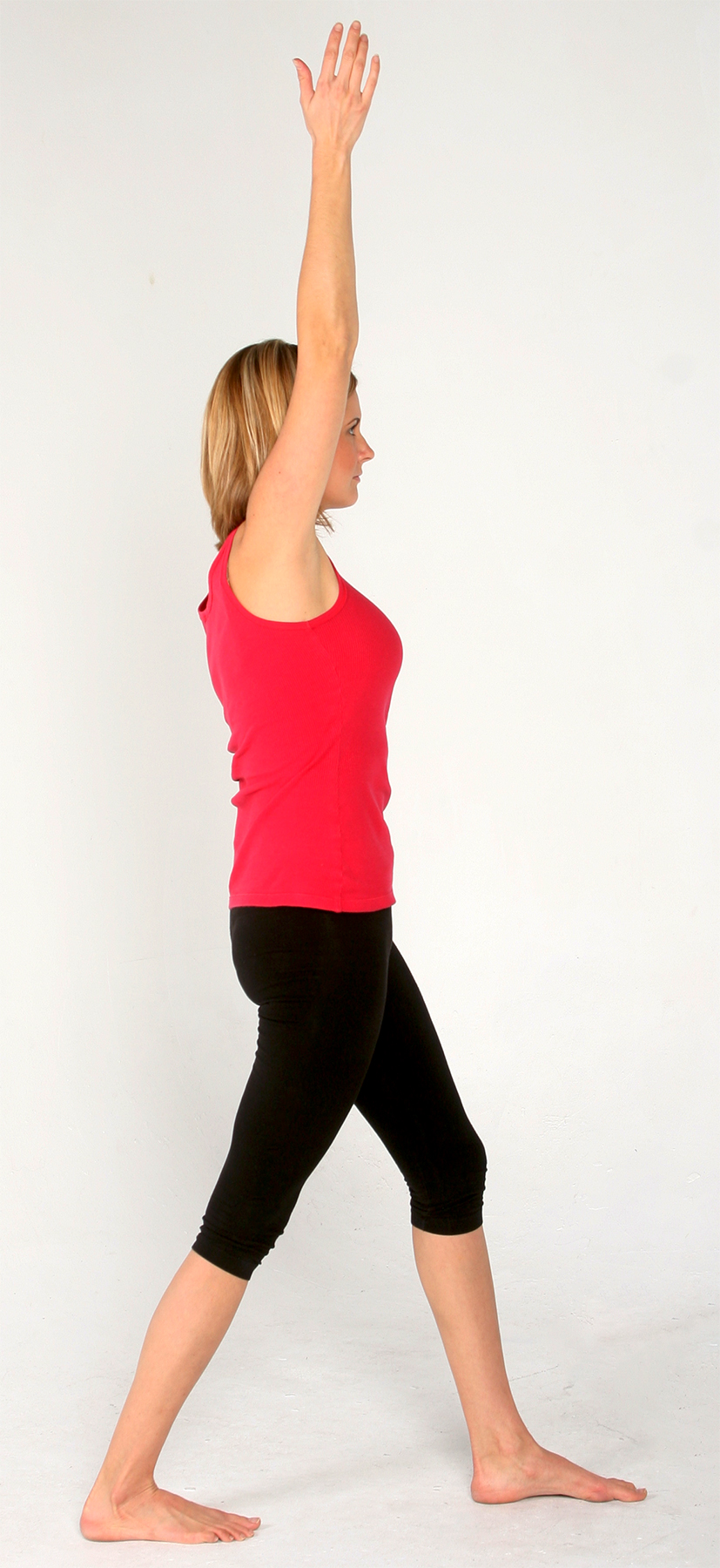
Step back with the right leg while raising the right arm over your head. Make sure both feet remain facing forward, the hips are tucked under and the right glute is firing. Do not overly shrug the shoulder of the arm being raised. Complete the movement on the right side by stepping forward with the right leg while bringing the arm down then step backward with the left leg and raise the left arm to complete the movement on the left side. Repeat on both sides 3-5 times at least once per day.
Use a Complete Approach for Success
Combining targeted soft-tissue release, controlled pelvic alignment, and kinetic chain integration to address the hip flexors ensures these vital, deep stabilizers function as intended relieving lower back pain and protecting knees, ankles, and feet over the long term.
Fitness, exercise and health professionals interesting in learning more about anatomy, and how muscles and other soft tissue structures affect pain and dysfunction, should check out the Understanding Muscles and Movement course (Module 2 of The BioMechanics Method Corrective Exercise Specialist certification program). Click on the image below.

Did you know that The BioMechanics Method offers the industry’s only Advanced Corrective Exercise Specialist certification? If you are ready to take your corrective exercise results to the next level. Click on the box below to learn more about The BioMechanics Method Advanced Corrective Exercise Specialist certification program.

References:
1McGill, S. 2016. Low Back Disorders: Evidence-Based Prevention and Rehabilitation. 3rd ed. Champaign, IL: Human Kinetics.
2Nakahira, Y., Iwamoto, M., Igawa, T. et al. 2025. Effect of individual spinal muscle activities on upright posture using a human body finite element model. Sci Rep 15, 3430. https://doi.org/10.1038/s41598-025-86788-0.
3Price, J., and M. Bratcher. 2018. The BioMechanics Method Corrective Exercise Specialist Certification Program. 2nd Ed. San Diego, CA: The BioMechanics Press.
4Price, J. 2018. The Biomechanics Method for Corrective Exercise. Champaign, IL: Human Kinetics.
5Price, J., and M. Bratcher. 2026. The BioMechanics Method Advanced Corrective Exercise Specialist Certification Program. San Diego, CA: The BioMechanics Press.