There are a number of hands-on musculoskeletal assessments you can perform to evaluate flat feet (overpronation). However, there are also many easy-to-interpret visual clues you can use to tell you if you overpronate and whether this problem might be the cause of your foot and/or ankle pain. You just need to know what to look for.
Overpronation Assessment
The simplest overpronation assessment is to take a look at your feet. The appearance of bunions, calluses, toes that are “scrunched” together, swelling and inflammation of the feet/ankles, and feet that are turned out like a duck (abducted) all suggest that you overpronate.
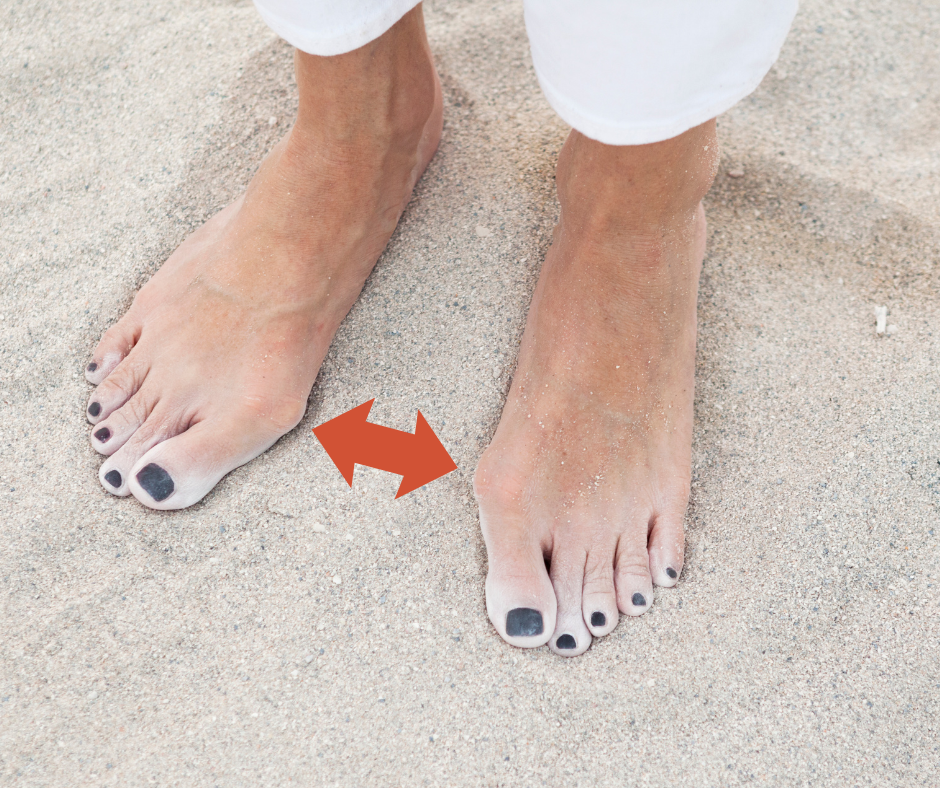 So how do we know that these visual clues point to overpronation? Overpronation is characterized by a collapsing inward of the foot and ankle toward the midline of the body. This means that weight is transferred across the inside of the foot and ankle, rather than being transferred forward over the end of the toes. This excessive pressure over the inside of the foot causes inflammation to the first joint of the big toe (bunions), calluses, and the toes to “scrunch” together.
As the foot and ankle collapse inward with overpronation, the knee follows them. This excessive movement of the knee toward the midline pulls the shin bones out of alignment. In compensation for this misaligned position of the lower leg and knee, the foot usually turns outward to help rotate the shin bones outward also. Therefore, if when looking at your feet, you see that they are in an unusual position (one or both are turned out), then you likely overpronate.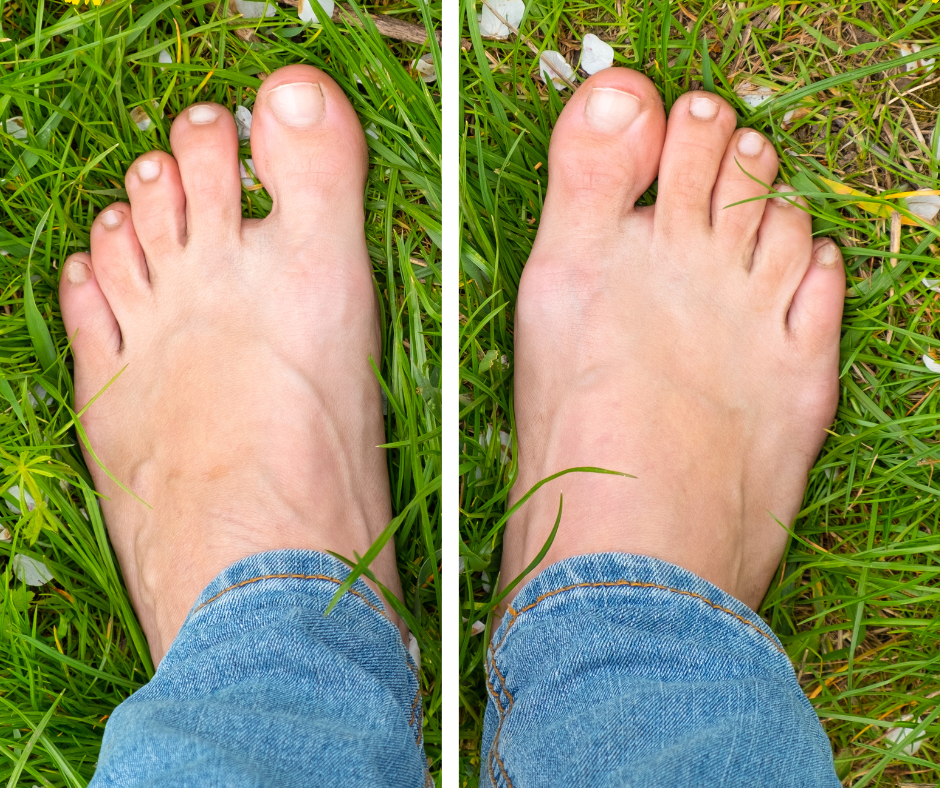
Knowing what to look for in the feet (and what these clues mean) can help you understand your underlying musculoskeletal and movement balances and make a self-assessment as to whether overpronation may be causing your foot and ankle problems.
To learn how to perform a structural assessment from head to toe and discover the underlying causes of aches and pains check out Module 1 (The Fundamentals of Structural Assessment) of The BioMechanics Method Corrective Exercise Specialist program or click on the image below.

To learn how to perform a complete movement analysis to uncover movement imbalances that might be causing or contributing to your clients’ dysfunction check out Module 1 (The Fundamentals of Movement Analysis) of The BioMechanics Method Advanced Corrective Exercise Specialist program or click on the image below.
